Service record
Service objectives, error-budget readings, incidents, changes, agent missions, source coverage and cost with their measurement basis.
 AI-native operations
Working identity
Observe. Orchestrate. Stay ahead.
Bring service signals, bounded investigations and governed responses into one operating workspace.
Operating intelligence
Operating decisions depend on which systems were observed, how recently they reported and what the evidence actually says. HELM brings those questions into the workspace alongside incidents, service signals, agent activity and cost. Investigation and response planning retain the supporting facts and the person responsible for acting.
Check coverage + freshness
Service context
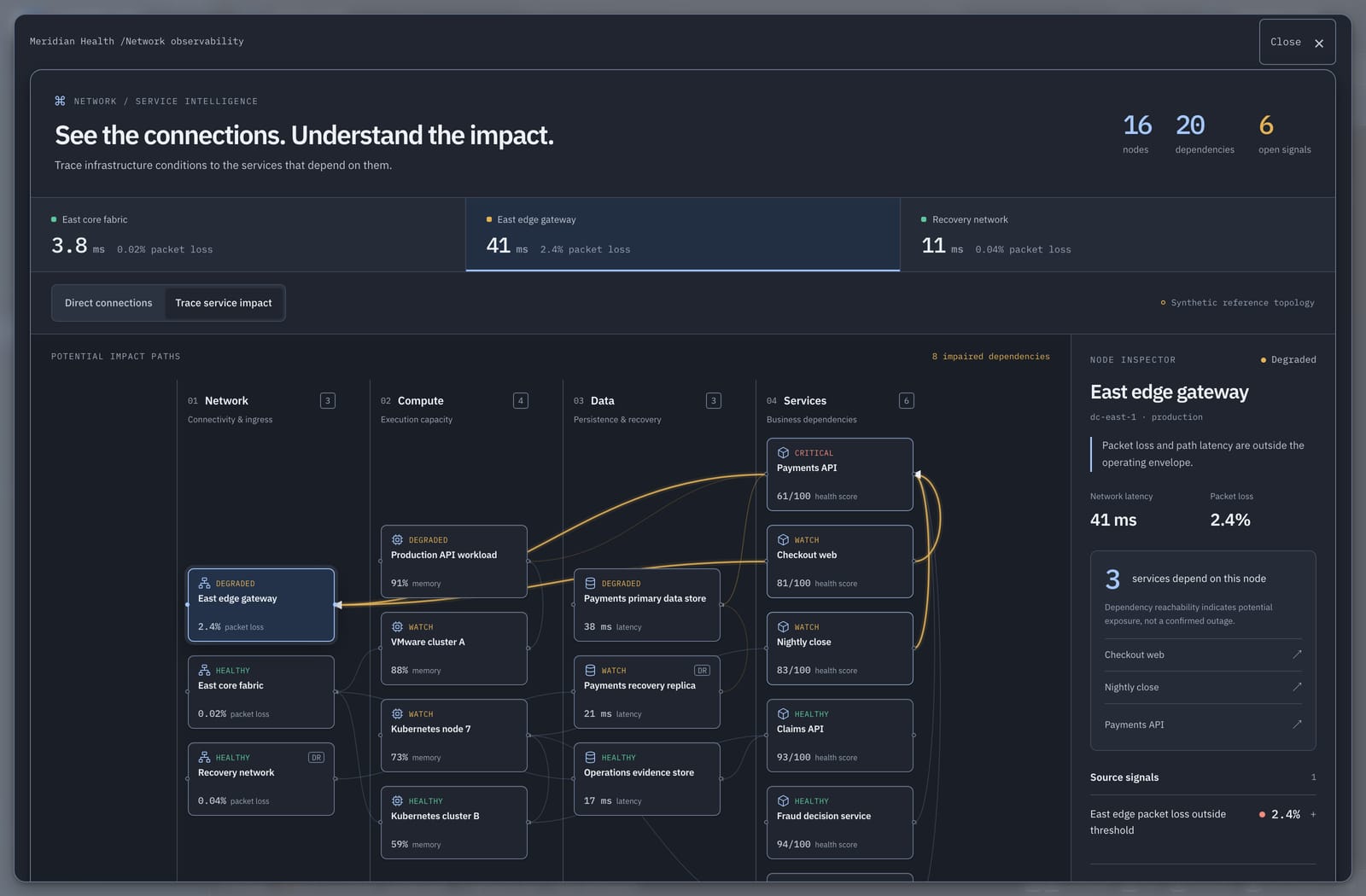
Registered service mappings connect admitted operating events to the service being examined. The selected window, source freshness and observed measurements give an operator a basis for interpreting a change.
Interactive example
Inspect how source coverage and action authority change the next move in a latency investigation.
Example service · queue latency investigation
The investigation asks about a 30-minute window.
A bounded target and reversal condition make a proposal reviewable.
Authored examples for exploring the workflow. Your choices update only this demonstration.
2 of 3 example checks met. Follow the evidence questions before carrying the example forward.
Observation windowMet
Queue and application sources cover the full requested 30-minute window with current readings.Proposed responseMet
The example plan names one queue, its precondition, expected effect and rollback threshold.Action reviewReview
The response proposal awaits the separate service owner's review.Send the bounded proposal and admitted evidence to the separate service owner for review.
Illustrative review record · human decisions and subsequent actions keep their own standing.
The product
HELM connects the operational picture to the work of responding. Service health, incidents, agent activity and cost provide context for evidence-backed investigations. Governed workflows preserve the plan, human authority and verification record around an approved action.
Inside HELM
Connect incidents, service objectives, infrastructure signals, agent activity and cost in an operating workspace. Teams can investigate a situation, examine the evidence behind a proposed response and retain the authority and result of an approved action.
Read admitted telemetry and source records alongside service health, incidents and operating costs. Inspect source coverage and freshness before acting on a signal.
Ask an operational question or run a bounded investigation. Follow the supporting sources, dependencies and unanswered questions behind the proposed explanation.
Compose a workflow with defined agent responsibilities, allowed actions and human review points. Examine the proposed scope and a local dry run before an execution decision.
For activated action paths, require the relevant policy checks and named approval. Retain execution and verification receipts alongside the service record and reviewed outcome.
Service objectives, error-budget readings, incidents, changes, agent missions, source coverage and cost with their measurement basis.
The question, admitted source evidence and bounded agent work behind an operational explanation or proposed response.
An inspectable record of the approved action, policy decision, execution and verification result.
Enterprise sources and write actions are activated for each environment. The reference experience uses labeled synthetic data and governed example actions.
In practice · illustrative scenario
An operator sees a latency change in a service and needs to decide whether to intervene. One source is recent, while another covers only part of the requested window.
Review the service mapping, reported measurements and coverage before comparing the signal with incident context.
Use admitted evidence in a bounded investigation and retain unresolved questions beside any proposed interpretation.
For an activated action, examine the target, conditions and rollback approach, then retain the authorized decision and verification result.
The illustrative outcome is an operating record that explains what was observed, what remained uncertain and why the chosen response was authorized.
A closer look
The sources admitted and mapped for your environment. The workspace exposes coverage and freshness so teams can understand what supports an answer. The reference experience uses labeled synthetic operating evidence; enterprise source activation is configured separately.
With its source facts and review standing visible. Activated reasoning can propose an interpretation and further evidence questions, while verified measurements remain distinct. An operator can inspect the basis of the brief before using it in a response decision.
For an activated governed action, the record includes its proposal, policy decision, approvals, execution and verification outcome. Preconditions, expected effects and rollback information give the reviewer context for what the action was intended to do.