Plan and change proposal
The requirement context, bounded scope, proposed implementation and source references that let reviewers examine the change.
 Agentic engineering with AI SDLC
Governed agentic engineering.
Connect requirements, bounded agent work, repository checks and human release decisions.
Explore the interactive exampleAI software delivery
The Agentic Engineering Platform brings the AI software development lifecycle into the everyday engineering environment. A workspace can govern model access across supported tools, delegate bounded repository work to an enrolled runner and retain the proposal, checks and independent review behind a person's acceptance decision.
planReference requirementsbuildBound the runner workcheckRun repository verificationreviewIndependent agent reviewacceptHuman decision requiredModel access
The governed gateway connects supported coding tools, the command line and Model Context Protocol clients to workspace-approved models. Calls are classified and checked against content, network and budget policy before routing.
Interactive example
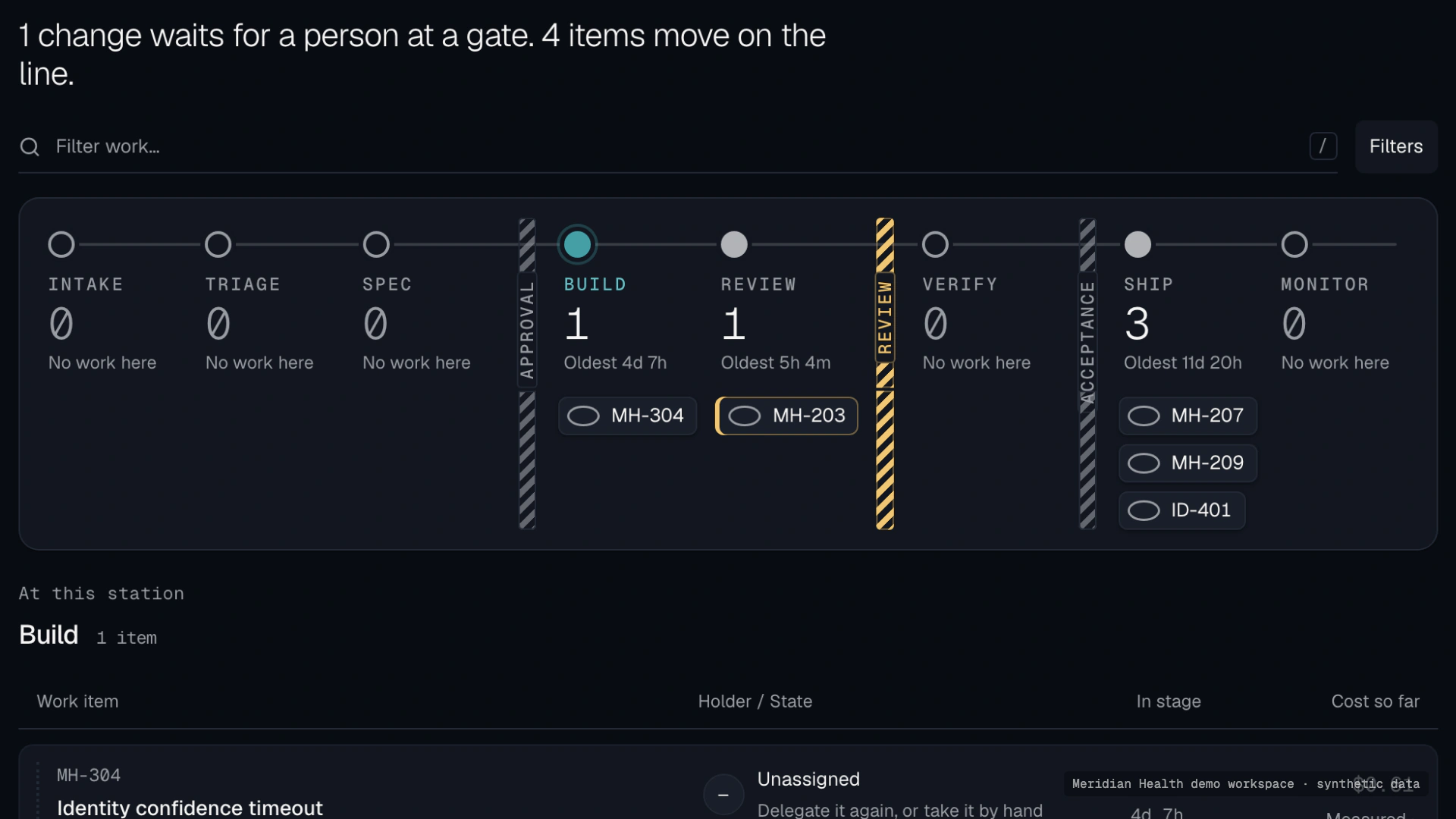
Connect the source revision, repository checks and independent review to the proposed change's standing.
Example repository · bounded defect fix
The work should carry a reviewed plan and a specific source revision.
An illustrative result retains the command and its outcome.
The requester and accepting reviewer have separate responsibilities.
Authored examples for exploring the workflow. Your choices update only this demonstration.
2 of 3 example checks met. Follow the evidence questions before carrying the example forward.
Runner contextMet
The example handoff binds the accepted plan, requirements, source revision and workspace policy to one defect fix.Repository verificationMet
The example return includes the repository verification command, its passing result and the proposed patch.Acceptance reviewReview
The example change awaits independent challenge and a separate person's acceptance review.Collect the independent challenge and route the change to a separate authorized accepting reviewer.
Illustrative review record · human decisions and subsequent actions keep their own standing.
The product
The Agentic Engineering Platform brings the AI software development lifecycle (AI SDLC) into a governed engineering workspace. Requirements and adopted policy shape a bounded plan. Enrolled runners carry out authorized work, repository checks and independent review inform human acceptance, and release evidence stays attached to the change.
Inside Agentic Engineering
Bring the AI software development lifecycle into the engineering workspace. Requirements, implementation plans, bounded agent work, verification and human acceptance contribute to a reviewable change, with model access and usage governed by workspace policy.
Capture requirements and prepare an implementation plan against the project's recorded policies. Keep requirement references, assumptions and unanswered questions with the proposal.
Propose a change against pinned source files or delegate a work item to an enrolled runner. Scope the work to the project and its approved execution controls.
Check proposed patches against the source they reference. Runner work can use the repository's test suite and a second agent's review before the human decision.
An authorized person reviews the proposal, unresolved questions and required independent review. Preserve the acceptance decision and the evidence it relied on.
Connect the release review to recorded engineering evidence. Inspect model usage and estimated cost, then record outcomes and lessons for future work.
The requirement context, bounded scope, proposed implementation and source references that let reviewers examine the change.
Recorded agent work, repository checks, review findings and reported usage connected to the work item.
An exportable receipt for the assembled engineering record that a recipient can verify independently.
AI features and enrolled runners use workspace-approved connections and controls. Authorized people retain acceptance and release decisions.
In practice · illustrative scenario
An engineering team needs a defect fix in an existing repository. The requirement is understood, but the team wants the proposed patch, repository checks and review findings together before acceptance.
Review the plan and bind the relevant requirements, source revision, workspace policies and verification command to the work.
An enrolled runner performs the bounded work, runs the repository's checks and returns the second agent's review with its reported usage.
A separate authorized person examines the change and outstanding questions, retaining the acceptance decision before the separate merge and release process.
The illustrative output is a reviewed change with its engineering context, test and challenge evidence, human decision and recorded cost of the attempts.
A closer look
Supported coding tools can use the project's approved gateway, while the command line and Model Context Protocol clients provide planning and proposal surfaces. The connection follows workspace model, content, network and budget policy rather than distributing a provider key to each surface.
On a runner you enroll on your own machine. A supported dispatch carries the reviewed execution context and uses a separate worktree and repository verification command. The returned work comes back for independent review and human acceptance.
The recorded build cost and build or review tokens for the period, including failed and rejected attempts, divided by human-accepted changes. It supports review of the reported work and its measurement window; acceptance remains distinct from observed deployment.